Light Beam Brushes: Illuminate Your Photoshop Projects
There is a distinct moment in digital design when a flat composition suddenly gains depth, atmosphere, and emotional resonance. Often, that shift happens not through complex layering or intricate vector work, but through the strategic application of light. Light Beam Brushes offer a streamlined way to introduce these luminous effects into your workflow. This collection is designed for creators who need to add instant atmospheric quality to their visuals without spending hours rendering lighting effects from scratch. Whether you are working on a moody editorial piece or a high-energy social media graphic, these tools provide the visual spark necessary to capture attention.
Understanding the Visual Personality of Light Effects
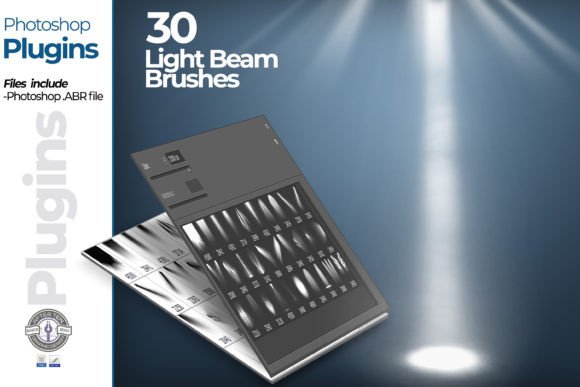
While we often discuss typefaces in terms of serif, sans serif, or script characteristics, digital brushes have their own visual language. The Light Beam Brushes set is defined by its versatility and realism. Unlike generic glow tools that can look artificial or muddy, these brushes are crafted to mimic the behavior of actual photons interacting with air, dust, and lenses. The collection ranges from the soft, diffused rays of natural sunlight to the sharp, dramatic cuts of stadium lighting and stage spotlights.
The appeal lies in the texture and intensity variations. Some brushes emulate the gritty, dusty beams seen in concert venues, adding a raw, energetic feel to music posters or event flyers. Others offer clean, sparkly lights that suit beauty campaigns, luxury packaging design, or festive holiday graphics. This variety allows designers to match the lighting effect to the specific mood of the project. It is not just about brightness; it is about directionality and color temperature. A warm, golden ray suggests nostalgia or comfort, while a cool, blue-tinted beam might convey technology, mystery, or nighttime urban energy.
For professionals focused on brand identity, consistency in visual tone is crucial. These brushes help maintain that consistency by providing a reliable library of assets that can be reused across different mediums. Instead of searching for new stock photos of light leaks for every project, you have a customizable toolkit at your fingertips. This efficiency supports a more cohesive look for clients who require a unified aesthetic across web design, print materials, and social media graphics.
Strategic Applications Across Creative Industries
The utility of Light Beam Brushes extends far beyond simple photo manipulation. For marketers and content creators, these assets are invaluable for creating thumb-stopping visuals. In a crowded social media feed, an image with dynamic lighting stands out. You can use these brushes to highlight a product in e-commerce photography, drawing the viewer’s eye directly to the item being sold. This technique enhances visual hierarchy, guiding the audience through the composition in a controlled manner.
In editorial design, light effects can transform a standard portrait into a compelling narrative piece. Imagine a magazine spread where a subject is illuminated by a single, dramatic shaft of light. This creates focus and intimacy, engaging the reader on an emotional level before they even read the headline. Similarly, in publishing, book cover designers can use these brushes to suggest genre and tone. A thriller might benefit from stark, high-contrast shadows and beams, while a romance novel could utilize soft, dreamy glows.
Entrepreneurs and small business owners often handle their own marketing materials. For them, these brushes simplify the process of creating professional-grade advertisements. Whether designing a flyer for a local event or a banner for a website, adding a subtle light effect can elevate the perceived quality of the design. It signals professionalism and attention to detail, which are critical for building trust with potential customers. The brushes are particularly effective in logo design contexts where a mark needs to appear illuminated or three-dimensional, adding a premium feel to the brand’s visual assets.
Technical Specifications and Workflow Integration
One of the most practical aspects of this collection is its technical foundation. The files are provided in the .abr format, ensuring compatibility with Photoshop CS and higher versions. This broad compatibility means that whether you are using the latest Creative Cloud suite or an older, stable version of the software, you can integrate these tools seamlessly. The brush dimensions range from 2400px to 4500 px, which is significant for modern high-resolution displays. This size ensures that the light effects remain crisp and detailed even when scaled up for large-format prints like billboards or trade show banners.
High resolution is critical for maintaining quality in commercial font and design projects. When you apply a low-resolution light effect to a high-density image, it can pixelate and break the illusion of realism. With these large-dimension brushes, you retain clarity and smooth gradients. This is especially important for packaging design, where close-up inspection by consumers is common. A blurry light leak on a product box can detract from the premium perception of the item inside.
Looking ahead, the developer has noted that future collections will include transparent PNGs. This expansion will benefit users who work in other design software besides Photoshop, such as Affinity Photo, GIMP, or various mobile editing apps. Transparent PNGs allow for drag-and-drop functionality, further speeding up the workflow for busy designers and hobbyists alike. However, the current .abr format offers the advantage of adjustability. You can change the opacity, flow, and blending modes within Photoshop to customize the intensity and color of the light, providing greater creative control than a static image file.
Best Practices for Using Light Effects in Design
To get the most out of Light Beam Brushes, consider the source of light in your original image. If you are adding a beam to a photograph, ensure the direction matches the existing lighting cues. If the sun is setting on the left, your added beams should originate from that direction. This adherence to physical reality helps maintain believability. Experiment with blending modes such as Screen, Add, or Overlay to integrate the light naturally with the underlying layers. Each mode interacts differently with colors and shadows, so testing is essential.
When pairing these effects with typography, remember that light should enhance, not obscure, the text. If you are using a bold display font or a delicate script font for a headline, ensure the light beams do not cross directly over the letters unless intentionally done for a specific artistic effect. Use the light to frame the text or create a backdrop that improves readability through contrast. For instance, a dark sans serif font will pop against a bright, glowing background created by these brushes.
Finally, always consider the licensing and intended use. These brushes are suitable for both personal and commercial projects, making them a versatile addition to any designer’s asset library. Whether you are crafting a unique invitation, designing a website header, or producing marketing collateral for a client, these tools offer a professional solution for adding depth and drama. By mastering the use of light, you elevate your design from merely functional to truly engaging, creating visuals that resonate with audiences and stand the test of time.